UX / Design · Event
Fifteen Seconds Festival – The future belongs to the curious ones
On 6th and 7th June, the Fifteen Seconds Festival took place in the Stadthalle Graz, which I was fortunate enough to attend this year. For those unfamiliar with it – the Fifteen Seconds Festival is an event featuring talks on business, innovation, creativity, and the future. I was already somewhat overwhelmed beforehand by the sheer number of presentations spread across 9 different stages. If you plan to attend the event next year, I strongly advise you to research in advance exactly which talks are scheduled, when they will take place, and to prepare a plan. Individual talks typically last 30 minutes – ideal for focusing on essential content and maintaining attention. Throughout, you receive new input and are constantly immersed in pure specialist knowledge. Even if the sessions are quite short, your head quickly starts to spin, and the small park, with coffee and food trucks, invites you to take a breather.
I attended many different talks, and while writing this blog post, I considered which topic I wanted to elaborate on. In recent months, I have extensively explored Augmented Reality (AR for short) and created a white paper, which you can download for free here. Therefore, it quickly became clear that I wanted to highlight this topic again in particular.
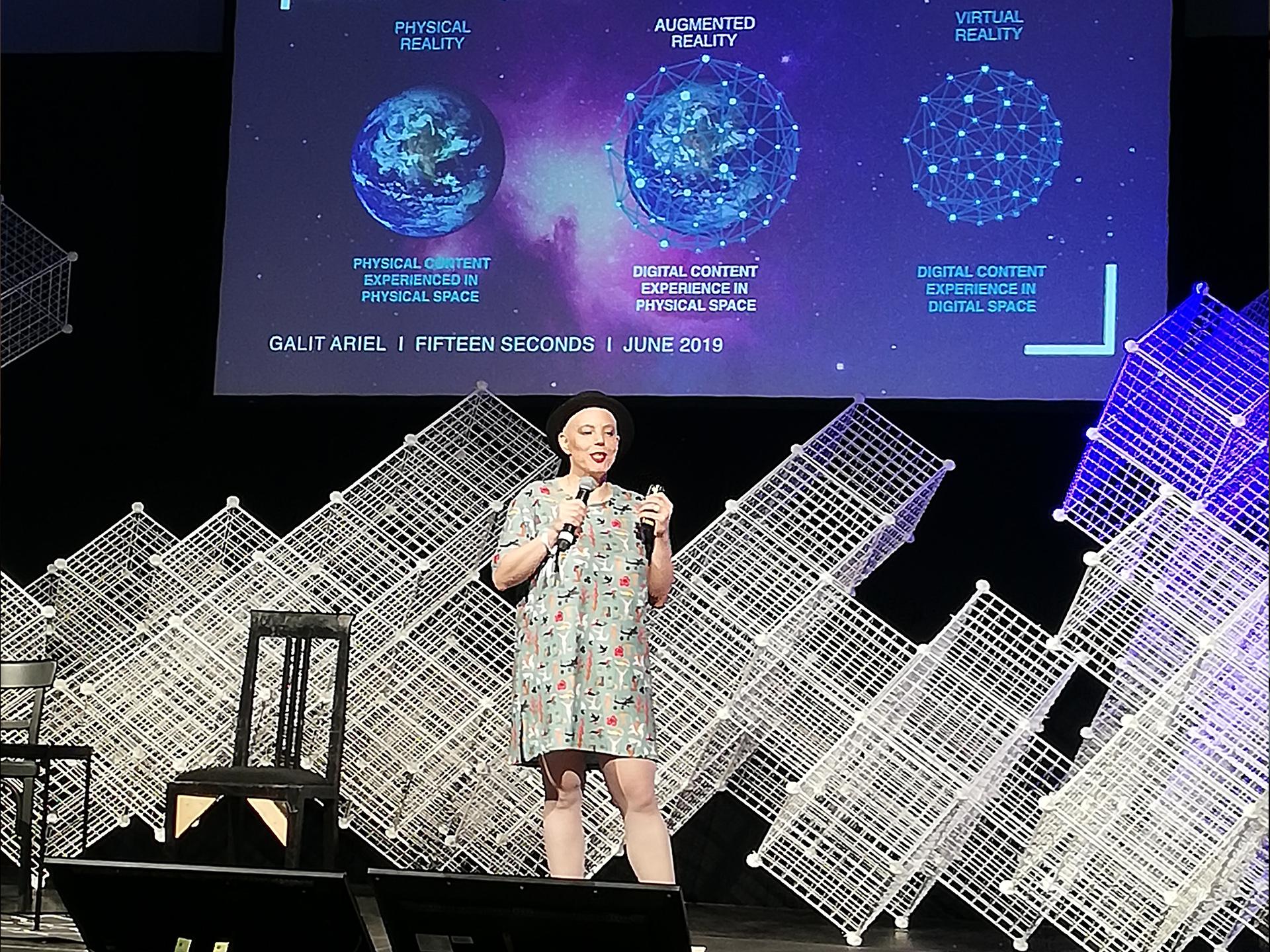
Early on the first day, Galit Ariel kicked off the Fifteen Seconds Festival in Graz with a talk on AR. Although talks on this subject played a very minor role this year, they were all the more illuminating and highly instructive. In her talk, “future space[s]”, Galit Ariel discussed how our space is defined and changed by Augmented Reality. We all need space – room to breathe, freedom to think creatively, or a virtual canvas to present our ideas. Space gives us opportunities to develop, it inspires us, and it informs us. 80% of our brain’s data processing is generated from visual input.
She distinguished between physical space (the 3-dimensional space where physical laws prevail), mental space (personal perspectives, dreams, and visions), and digital space (a measurable, synthetic/artificially created space). And it is precisely this digital space that is immensely expanded with the help of AR, thereby bridging the different types of space.
A good use case for how our digital space is expanded and integrated into physical space with the help of AR is Minecraft AR, which was also recently demonstrated at the Apple WWDC Keynote. Virtual building blocks can now be placed in the real world using AR technology and admired by other users. Additionally, Galit Ariel also spoke about examples from the e-commerce sector. Augmented Skins, meaning surfaces that can be visually altered or virtually discovered with AR, or storytelling examples, such as that from Jack Daniels, where the whisky bottle transforms into a pop-up book, show the new possibilities arising. E-commerce is becoming experience-commerce, creating a unique brand experience.
Alongside all the new innovations, Galit Ariel also pointed out the negative aspects of the technology. For example, the increasing alienation of people who focus solely on their smartphones instead of conversation. But also a lack of trust in technology and sensory overload, meaning an excess of information, are just some points that need to be considered and continuously evaluated.
A particular highlight of the first day for me was the talk by James Beacham, which I absolutely must report on. The particle physicist works at CERN’s Large Hadron Collider (LHC) and, with his talk “What’s Outside The Universe?”, he transported us into the infinite reaches of space. In an understandable way, he introduced topics around atoms, the Higgs boson, the LHC, and dark matter, albeit very superficially. The question of what exists outside the universe, the inconceivable notion of nothingness, and whether we can truly understand or even want to know the answer to such questions was fascinating. With a discussion on the existence of parallel universes and the meaning of life, James Beacham captivated the audience, reaching even non-physicists. Even if one assumes the existence of parallel universes, he made it clear that we are unique on our Earth, at this specific time and place. And how important it is how we interact with each other. He created an exceedingly emotional, very subtle yet perfectly fitting and clear bridge to current political realities. This final talk of the day was rewarded with a standing ovation, what felt like a 10-minute continuous applause, and pure goosebumps. Such talks demonstrate how important and valuable these events are, even outside one’s own field of expertise. And even after the end of the first day, while sitting in the sun with a beer and reflecting on the day, this particular talk and the questions it raised stayed with us for a long time.
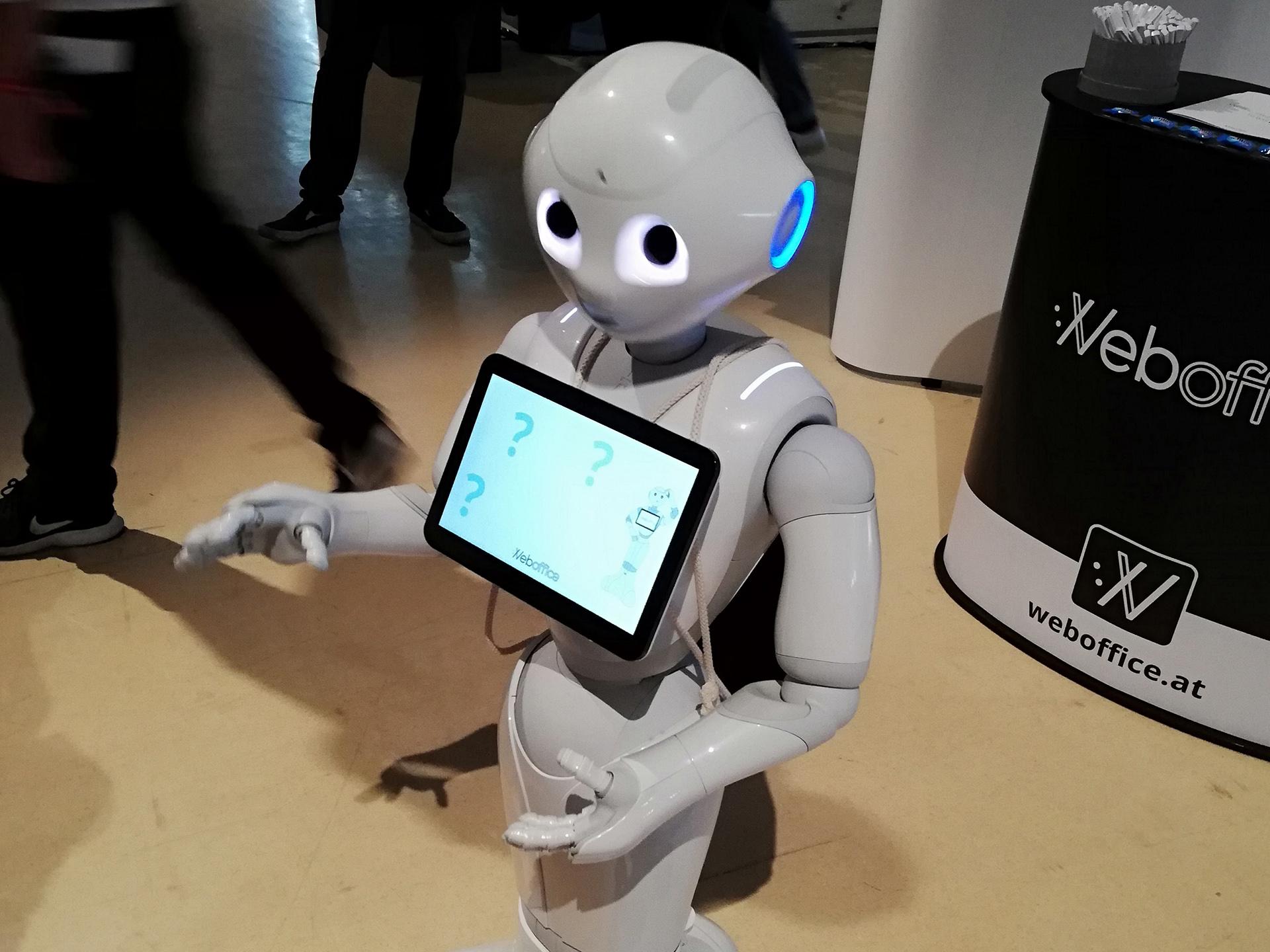
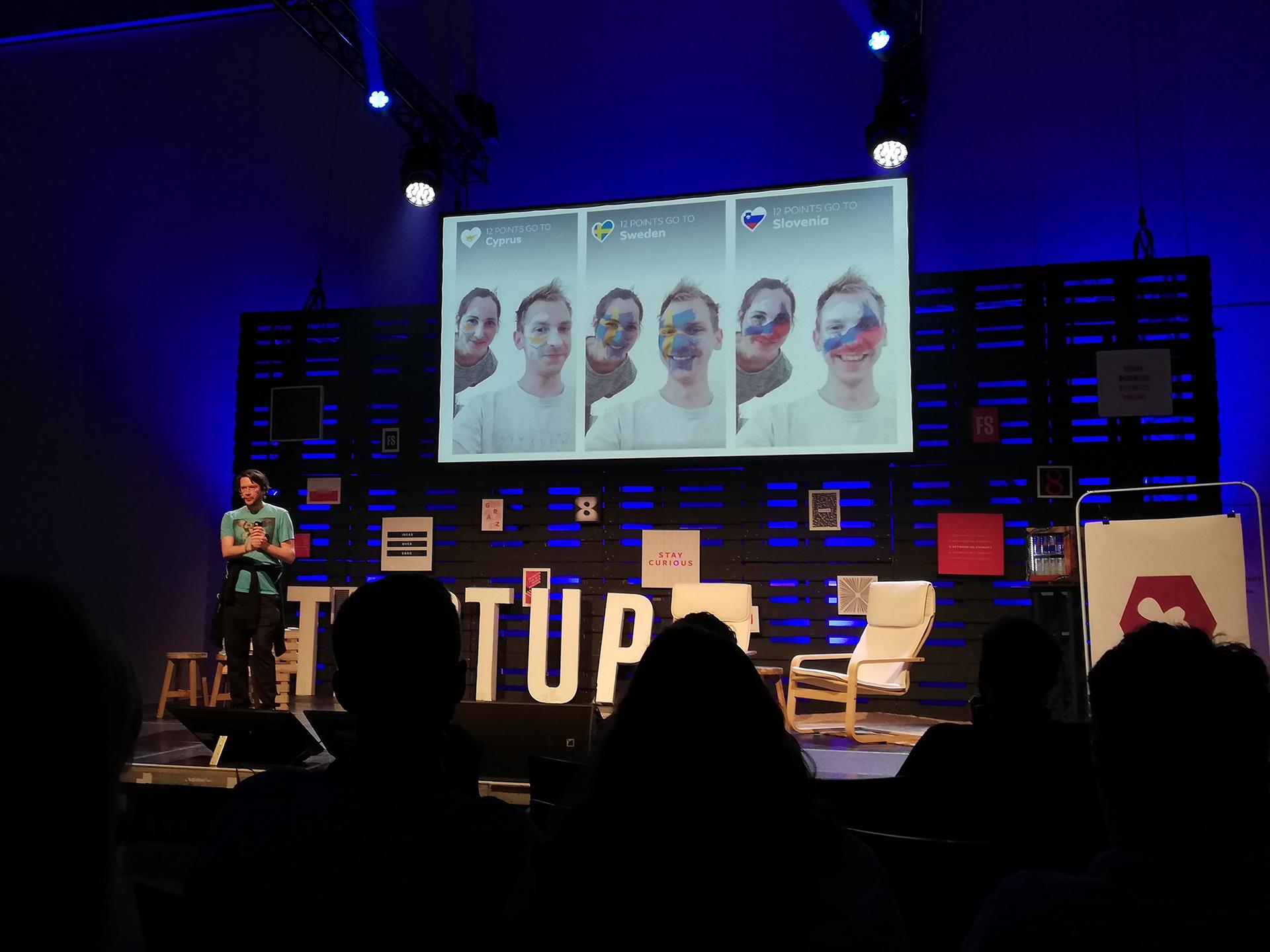
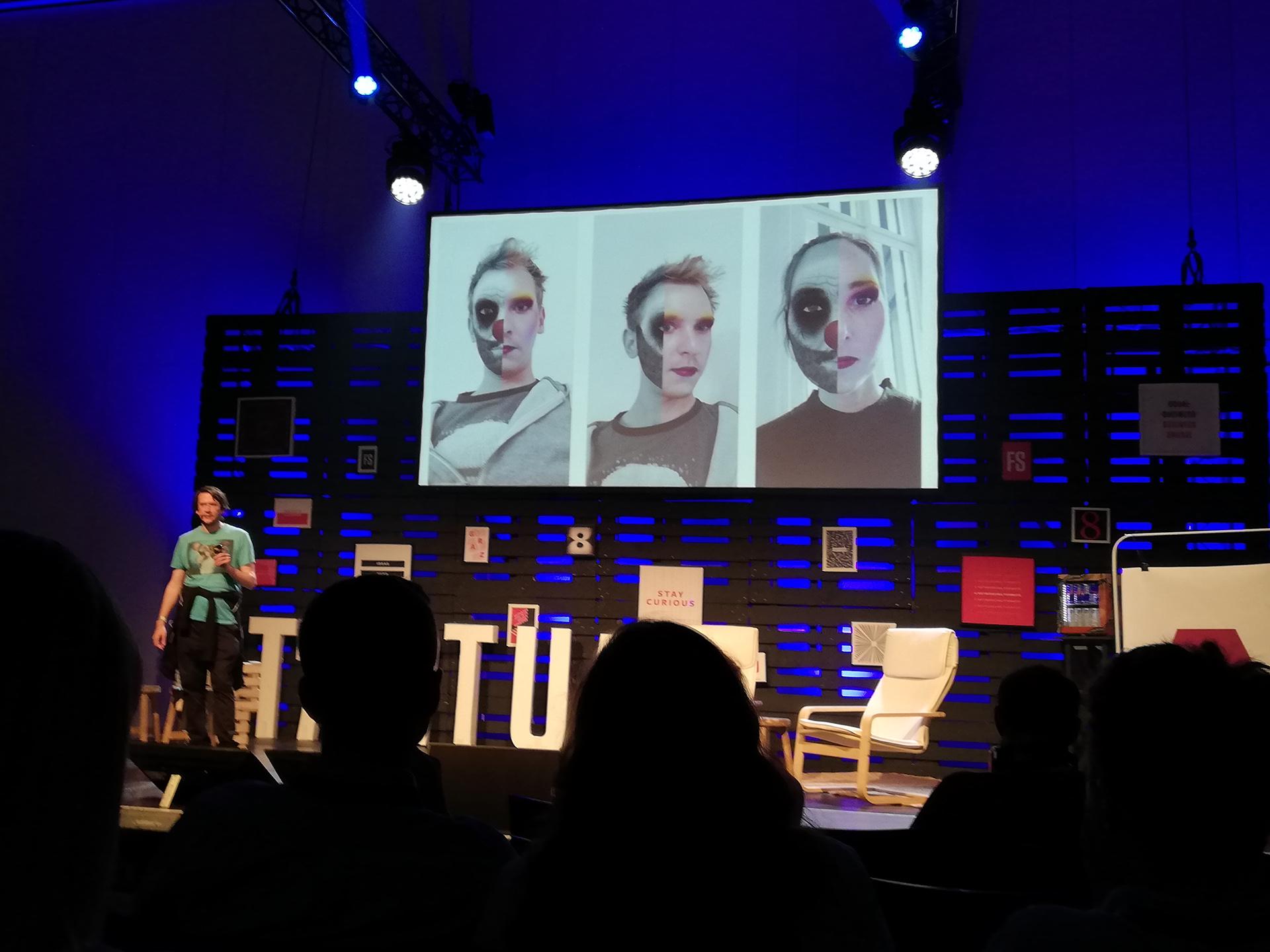
But back to Augmented Reality. On the second day, there was another talk on this topic by Thomas Schranz on the Startup Stage. He spoke about AR campaigns on Instagram, Snapchat, and Facebook. The reason he specifically focuses on these platforms is clear. Over 1 billion users use AR filters, and they are directly accessible via the Facebook/Instagram/Snapchat camera, which the target audience usually already has installed on their smartphones, without any additional apps. Thomas Schranz explained for whom AR applications, in this case face filters, are particularly interesting. In fact, I conclude that they are relevant for everyone in some way.
For brands, new storytelling methods emerge to create brand awareness and brand experiences. Additionally, traditional channels are oversaturated and comparatively expensive. Startups also benefit from relatively inexpensive implementation, in contrast to commercials or similar, which require a much higher budget. Agencies currently have the opportunity to differentiate themselves from the competition. AR applications and campaigns are still relatively rare. Furthermore, face filters created with Spark AR and directly integrated into the Facebook ecosystem can be optimally combined with existing Facebook campaigns on Facebook and Instagram. Freelancers can also benefit from the new face filters by applying existing skills (such as graphic design, Javascript, etc.) within Facebook’s existing infrastructure.
Regarding application areas, Thomas Schranz provided some interesting examples. A hype that is slowly but very successfully catching on is AR games. The new interaction possibilities are fun and encourage users to try them out. Completely new opportunities also arise for product placements. Especially in the beauty segment (for example, lipstick or make-up), users can directly see how the product looks and works on themselves. Face filters and AR applications can also be used to capitalise on existing hypes or events. Naturally, examples for these were also shown. For me, it was a special moment, of which I was very proud, when Thomas Schranz showed our face filters for the Eurovision Song Contest and Life Ball as examples on the screen. For everyone who hasn't tried our face filters yet: You can see the filter for the Eurovision Song Contest here. Our latest filter for the Life Ball is available here. You will be redirected directly to the Facebook app if you have it installed. Take a photo and show it to us by tagging us in it.
Face filters and AR applications in general are clearly on the rise. And as Thomas Schranz said at the beginning of his talk: “AR filters are here to stay”. They are still relatively underrepresented, but with great success. However, no one can currently say how to do face filters or AR campaigns correctly. The possibilities with AR technology are completely new, and there is no checklist for what works well or less well. Thomas Schranz called for experimentation and letting creativity run wild. Now is the right moment for it. Facebook has announced that it will open Instagram face filters to everyone this summer. However, no exact date has been given yet. So there is still some time to familiarise yourself with the technology. We must now seize this head start – entirely in the spirit of the Fifteen Seconds slogan: “The future belongs to the curious ones”.
In summary, I must say that I was more than thrilled with the Fifteen Seconds Festival and returned with a lot of new input, ideas, and motivation. In addition to talks specifically tailored to my professional field, I also attended many talks purely out of curiosity, such as the aforementioned presentation by James Beacham on the universe. I believe it’s not just about expanding one’s expertise in one’s own field. Such sessions encourage reflection, offer a broader perspective, and stimulate new ways of thinking. I was also impressed by the relaxed and informal atmosphere during the event, which encouraged casual exchange and conversations with people from different fields.
For everyone who was equally enthusiastic or has become curious – next year, the Fifteen Seconds Festival will take place from 4th – 5th June.