
Sadly, all good things must come to an end. However, the last day of DrupalCon was in no way inferior to the previous ones. And actually, it's not really over yet…
The engineer, the designer and the dictator
While more philosophical with a touch of stand-up comedy and less technically oriented, one could – apart from hearty laughs – take away a lot from [Michael Lopp][rands]'s keynote. With great wit, he talks about the three fundamental roles necessary to successfully carry out a project. And of course, what happens if the engineer, the designer or the dictator are not present.
Perhaps not groundbreaking new knowledge, but anyone who has tried to get something of their own off the ground (or is currently doing so) will find one or two insights. Or at least be thoroughly amused.
adequately warmed up, the session was immediately renamed “The only way to responsive web design.” The reason for this was that not only the simple yet ingenious breakpoint Compass Plugin was covered, but also the Singularity Grid System.
Breakpoint
Anyone who has already worked with Media Queries will have no problem getting to grips with Breakpoint. However, there are two Advanced Features that should not be missed.
With the no-query-fallback, it is possible to work according to the mobile first paradigm and simultaneously support older browsers without having to use resource-intensive and error-prone Javascript shims. You can either work with the popular script Modernizr, or automatically generate Internet Explorer stylesheets. Pretty handy.
The media-query context feature is a little harder to grasp at first glance. It allows you to write reusable SASS Mixins that can react to the current context (how many columns am I displayed on, which breakpoint is currently active). Definitely useful in larger projects.
Singularity
While Singularity was known to me, apart from its ability to generate columns of varying widths, I never noticed a big difference to other semantic grid systems. After Sam's explanations, in which he precisely explained and differentiated Singularity from other systems, I concluded that it is definitely worth taking a closer look.
Configuration management in Drupal 8
Since I hadn't had the opportunity to deal with this topic before, I was particularly looking forward to this session and was not disappointed.
Greg Dunlap, aka heyrocker, the CMI Initiative Leader, provided insights into the development status. And even if not everything he said is set in stone, I see rosy times ahead for us Drupal developers.
Previously, Drupal's configuration was stored in the database, which ultimately mixed it with content, making website deployment very difficult. The Features module goes a very long way to address this problem but also has its own issues. From Drupal 8 onwards, the configuration will be removed from the database and stored exclusively in easily readable and modifiable *.yml files. This allows the configuration to be seamlessly integrated into version control. And it will be possible to configure and control a site purely via these files, saving developers a lot of clicking time and effort. A mechanism has even been planned to allow dev, staging and live configurations to be kept in parallel in the repository.
It is also interesting that the Configuration Management System will support multilingualism out-of-the-box, and it will be possible to change the configuration based on the current context. While this won't be used in core, Contrib projects can do all sorts of great things with it. An obvious candidate is the domain module.
The joy of cooking
Since the session on Chef was held by an Opscode employee, it gave the whole thing a bit of a promotional event feel. Nevertheless, it provided a good insight into why it is necessary to manage one's infrastructure using a file-based tool like Puppet, Chef, or Ansible, and of course, why Opscode's paid services are the best way to achieve this ;).
All good things come to an end…
The closing session provided some interesting information and statistics about the conference. A total of over 3,300 participants attended, and the proportion of women increased by a considerable percentage compared to last year. The Help4OK-Team completed the help page for victims of the Oklahoma tornado in a 24-hour coding marathon, demonstrating how much good motivated people can achieve with the right tools (Drupal).
Finally, there was a call to register immediately for DrupalCon Prague, and the venue for DrupalCon 2014 was unveiled with great fanfare: Austin
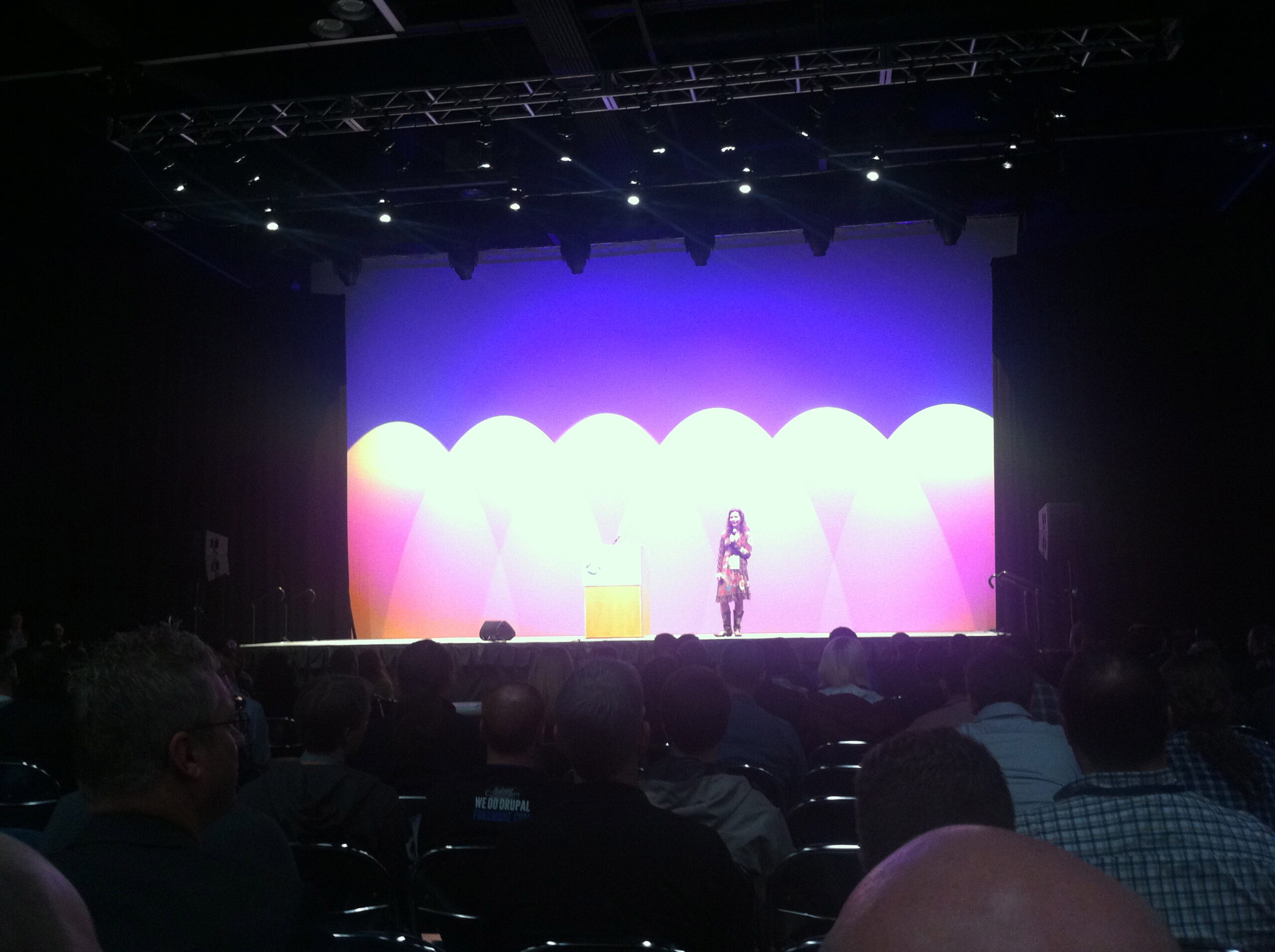
Like a sausage, DrupalCon actually has two ends. While the sessions are over, there are still code sprints to follow where the Drupal Core is advanced and new contributors are trained.
For me, DrupalCon Portland was a great experience despite the miserable weather, and I would like to thank both my employer Zensations, and the Drupal Association and Community. Great people make great things possible.